In the Digital Age, Analog Fire-Starting Matters: CHACCARD
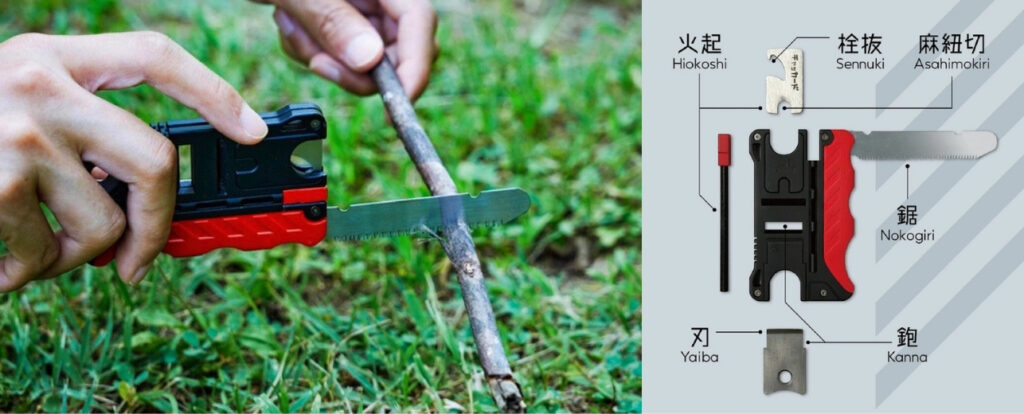
Product Concept: Battery-Free Reliability in Your Pocket
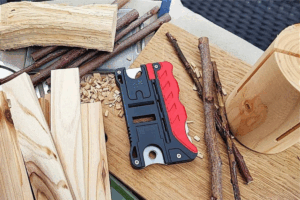
When smartphones and mobile batteries run out of power, they become nothing more than dead weight. CHACCARD is an analog fire-starting tool that requires no batteries and no gas. By striking metal against metal, it produces sparks that ignite tinder.
Digital devices are extremely convenient, but their performance often declines under harsh conditions such as disasters, blackouts, extreme cold, strong winds, or wet environments. CHACCARD was designed as a minimalist tool that works as both an emergency preparedness item and an Everyday Carry (EDC) solution.
In daily life, it supports light outdoor activities and solo camping. In emergencies, it helps secure a critical source of fire.
Who CHACCARD Is For
• EDC minimalists who want a truly reliable, battery-free backup tool
• Individuals and families preparing for power outages and disasters
• Solo and ultralight campers who prefer skill-based fire starting without digital dependence
Why Analog Makes Sense Today: Three Practical Reasons
Redundancy and Backup
Electronic lighters and plasma lighters fail once their batteries are depleted. An analog fire starter works without electricity, making it an ideal last-resort solution.
• Provides redundancy alongside electronic lighters
• Allows battery power to be reserved for communication and information
• Works in cold, wind, and light rain as long as the tinder is dry
Easy Maintenance and Long Life
CHACCARD requires no fuel management.
• The ferrocerium rod gradually wears down in a visible, predictable way
• No preheating or consumable fuel required
• Simple maintenance: wipe dry and keep the striker edge sharp
This makes it ideal for minimalist EDC users who value low maintenance and longevity.
Environmental and Safety Considerations
CHACCARD does not use combustible gas.
• No gas leaks or fuel degradation risks
• Safe for long-term storage in emergency kits
• Users must follow local fire regulations and facility rules
Key Features of CHACCARD
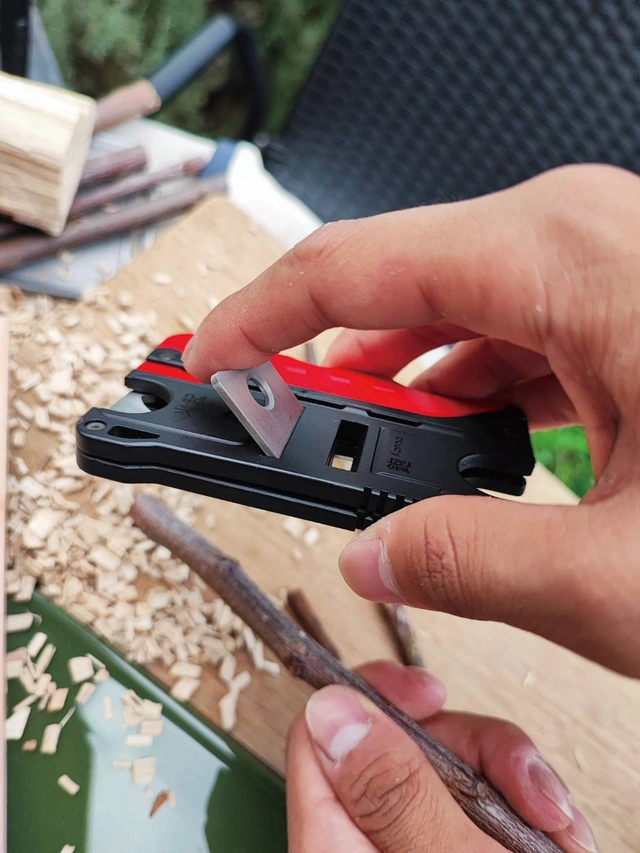
The Key to Powerful Sparks: Ferrocerium Rod Material and Diameter
The amount and temperature of sparks are determined by the rod’s material and thickness (diameter).
Material:
Ferrocerium produces a large volume of sparks at temperatures of around 3,000°C when scraped. A light oxidized layer on the surface does not affect performance.
Diameter Guidelines:
- Minimal EDC setup — Thin (approx. 3–4 mm): Lightweight and easy to carry. Best for small tinder.
- All-rounder — Medium (approx. 5–6 mm): A well-balanced choice, offering both strong spark output and good portability.
- Harsh conditions — Thick (approx. 7–8 mm or more): Performs better in strong wind, cold, and humid environments, though it adds weight.
Striker Edge:
Even with Seki’s blade-making heritage, what matters most is an edge that is close to a right angle. The sharper and more defined the edge, the denser and more reliable the sparks.
One-Handed Operation: Designed for Left-Handed Use and Gloves
In real-world use, the basic technique is to secure one hand and pull with the other.
Move the Rod, Not the Striker:
Fix the striker in place above the tinder and pull the rod backward. This prevents the tinder from shifting and allows sparks to land accurately.
Left-Hand Friendly:
With a symmetrical layout of the rod and striker, the same motion works equally well with either hand, making it comfortable for left-handed users.
Glove-Compatible:
A striker with anti-slip features—such as serrations or vertical grooves—helps maintain grip and control even when wearing gloves in cold conditions.
Water Resistance & Durability: Conditions and Limits
Ferrocerium works even when wet—simply wipe it dry. However, sparks will only ignite dry tinder.
In Rain:
Wipe the rod inside your clothing, then keep the tinder as dry as possible. Carry tinder in a zip bag or film canister.
By the Sea / Salt Exposure:
After use, rinse with fresh water and wipe dry. For long-term storage, apply a very light coat of anti-rust oil or store with a desiccant.
Drops & Wear:
The rod gradually shortens as it’s used. A protective cover or screw-mounted design helps prevent breakage.
Tinder Compatibility: Char Cloth / Jute Fibers / Cotton
Fire-starting success depends heavily on the tinder.
Highly Compatible:
Char cloth, jute (hemp) fibers, cotton balls, tissue with a small amount of lip balm or petroleum jelly.
Household Substitutes:
Cotton pads, paper towels, wood shavings from disposable chopsticks, lightly charred cardboard.
Placement Tip:
Keep tinder fluffy. Compressing it reduces airflow and makes ignition harder.
Design & Portability: Pocket / Keychain / Neck Carry
Whether for emergency kits or EDC, it only matters if you actually carry it.
Slim Plate + Short Rod:
Ideal for everyday pocket carry.
Keychain / Neck Carry:
Great for preventing loss. A soft case helps avoid scratches from metal-on-metal contact.
Integrated Design (Rod + Striker):
Faster from draw to ignition.
Spark Spread & Safety Zone (Outdoor Guidelines)
Sparks can travel several dozen centimeters, farther in strong wind.
Safety Zone:
Clear a radius of about 2 meters from people and gear. Use a non-flammable surface (soil, stone, or a fireproof mat).
Orientation:
Place tinder downwind; strike sparks from the windward side.
Extinguishing:
Always keep water, sand, or a wet towel within reach. After finishing, do not touch immediately—embers may remain hot.
Use-Case Scenarios: Everyday Life, Power Outages, Outdoor Activities, and Education
72-Hour Power Outage Scenario: How to Secure Cooking and Warmth at Home
Important premise: Open flames indoors are not allowed. There is a serious risk of carbon monoxide (CO) poisoning and fire. If your home does not allow open flames on balconies or outdoors, always follow building or community rules and use fire only in permitted outdoor areas.
In this context, CHACCARD serves as a reliable ignition tool in the following ways.
Solid fuel tablets / alcohol stoves
You can ignite them directly with sparks, even without chemical fire starters. Use a windscreen in windy conditions.
Candles
Candles work as a heat source, light source, and ember base. Start with a candle, then move to solid fuel, and finally to small sticks in stages.
Charred newspaper or cardboard
If you pre-burn a surface until it turns black (charred), sparks catch much more easily.
72-Hour Minimal Emergency Kit (Go-Bag)
- CHACCARD body / striker
- Cotton + petroleum jelly (sealed bag) / jute twine
- Solid fuel or alcohol stove / windproof lighter (for redundancy)
- Fireproof sheet / compact windscreen / water for extinguishing
- Work gloves, flashlight or headlamp, whistle
Everyday Carry (EDC) Use in Normal Times: Commuting, Car, Pouch
Commuter bag
Keep CHACCARD, cotton + petroleum jelly, and a fireproof sheet in a pen-case-sized EDC pouch. Total thickness should stay around that of a business card holder.
Car storage
Metal parts can get extremely hot. Store in shaded areas using a heat-resistant pouch.
Inspection routine (once a month / 2 minutes)
- Check remaining rod length
- Check that the striker edge is still sharp
- Check tinder for moisture
Mini practice
In permitted outdoor areas such as parks, aim for “one spark, one ignition.” Muscle memory makes a big difference in real emergencies.
Solo / UL Camping: Starting a Fire Without Fire Starters
Basic form
Fix the striker in place and pull the rod back. Keep the tinder loose and airy.
Kindling sequence
Char cloth → feather sticks (very thin shavings) → pencil-thick sticks → thumb-thick sticks → wrist-thick sticks. Always prepare each step in advance.
Bad conditions
In light rain, shave dry material from the inner bark or the core of fallen wood and mix it into your tinder.
Redundancy
Carry a lighter or waterproof matches as backup. UL safety means your plan should never fail due to a single tool.
Etiquette
Use only designated fire pits. Ground fires are prohibited, even with fireproof sheets, in many areas. Always follow site rules.
Disaster Preparedness Education & Workshops: Teaching the Essence of Fire Safely
Visualizing the three elements of fire
Fuel = cotton
Oxygen = fluff and airflow
Heat = sparks
Demonstration flow
Instructor demonstrates form → participants practice dry movements → actual ignition. Control the number of participants and safe distances.
Safety setup
Non-combustible ground (sand, soil, fireproof sheet), a clear 2-meter radius, water, sand, and wet towels always within reach.
For children
Always supervised by adults. Indoor and balcony use is prohibited. Afterward, confirm no embers remain, fully extinguish, and do not touch.
Learning goal
Experience firsthand that even when digital devices fail, analog tools and basic principles still solve real problems.
Comparison: Lighters / Electronic Lighters / Other Fire Starters
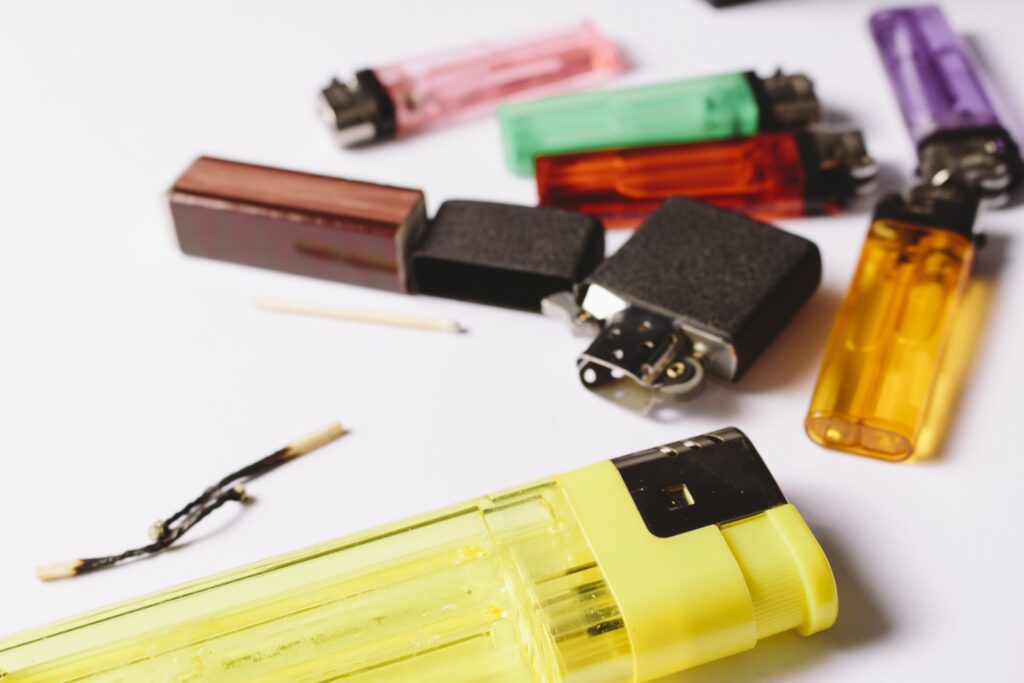
| Tool Type | Power Source | Reliability | Weather Resistance | Maintenance | Best Use Case |
|---|---|---|---|---|---|
| CHACCARD (Ferro Rod) | None | High | Strong (except wet tinder) | Very Low | EDC, disaster prep, camping |
| Gas Lighter | Butane | Medium | Weak in cold/wind | Fuel management | Daily casual use |
| Turbo Lighter | Butane | High | Strong wind, weak cold | Fuel management | Fishing, outdoor wind |
| Plasma Lighter | Battery | Medium | Wind OK, water weak | Charging required | Short outings |
| Waterproof Matches | Chemical | High (limited count) | Strong | One-time use | Emergency backup |
Key Point:
Because CHACCARD requires no batteries or fuel, it excels in environmental resilience and easy long-term storage. Even when gas runs out or devices can’t be recharged, it continues to function as a reliable last-resort fire-starting tool.
Differences vs. Plasma Lighters / Waterproof Matches / “Permanent Matches”
- Plasma lighter: One-button convenience. However, it’s vulnerable to dead batteries and moisture. Best used as a supplement in an EDC setup.
- Waterproof matches: Strong in high winds and light rain, but supply is limited. Reliable as a primary ignition in an emergency kit.
- “Permanent match” (oil-based): Fails when fuel runs out; watch for evaporation during storage and gasket degradation.
- CHACCARD: Requires no refills and excels at long-term storage. Low practice cost, and skills gained become a reusable asset.
Best Choice by Use Case
- Home emergency preparedness: CHACCARD + waterproof matches + candles—a three-layer setup that avoids overreliance on batteries or gas.
- EDC (commuting / urban): CHACCARD + compact plasma lighter—analog and digital redundancy.
- Mountaineering / long treks: CHACCARD + windproof lighter—improves ignition success at altitude and in cold conditions.
- Winter camping / strong winds: Windproof lighter as primary, CHACCARD as backup; prepare oil-based tinder.
When CHACCARD Excels / When It Doesn’t
Advantages
- Power outages or disasters where charging or fuel resupply is difficult
- Post-rain, low-temperature, or otherwise harsh environments (as long as tinder is dry)
- Long-term storage for emergency kits where minimal degradation is critical
Limitations
- Indoor or no-open-flame areas (use is prohibited)
- Heavy downpours or situations with soaked tinder
- Scenarios requiring instant, one-button ignition (gas/plasma is faster)
Setup & Carry Optimization
Minimal EDC Kit Example (Tinder, Wind Protection, Storage)
Build an “always-ready ignition” kit in business-card size.
- CHACCARD body + striker (integrated designs allow faster draw and use)
- Tinder: 2–3 cotton balls with a small amount of petroleum jelly (sealed mini bag)
- Heat-resistant sheet: A6 size (about two business cards)
- Simple wind shield: Heavy-duty aluminum foil folded to business-card size
- Mini extinguishing option: Water sealed in a straw or one wet wipe
- Storage: Flat zip bag or slim pouch (heat- and water-resistant)
Urban EDC Storage Examples (Suit / Commuter Bag)
- Suit days: Carry the full kit in an inner-pocket card case. Target thickness: under 1 cm.
- Commuter bag: Store in a zippered inner pocket. Arrange in draw order
(Top: CHACCARD → Middle: tinder → Bottom: heat sheet). - Keyring carry: Use a quick-release clip so you can detach it only when needed—reduces loss.
- Vehicle carry: Avoid dashboards. Keep out of direct sunlight. In summer, metal heats up—use a heat-resistant pouch.
Case / Strap Selection & Loss Prevention
- Case: A cap that protects the rod tip is ideal. Fabric or silicone lining prevents noise and scratches from metal contact.
- Strap: A thicker loop that’s easy to grip with gloves. Fix it so it doesn’t hang toward the spark direction.
- Color: High-visibility (neon) colors help recovery if dropped.
- Identification: Add a name tape, contact tag, or phone finder tag to the case (keep attachments minimal on the body, which gets hot).
Rust & Moisture Control (Silica Gel, O-Rings, Drying)
- Daily care: After use, dry wipe → if used in rain/sea air, rinse lightly with fresh water → dry wipe.
- Light rust prevention: For long-term storage, apply a very thin coat of mineral oil to the rod and wipe it out with tissue.
- Drying management: Place a small silica gel pack in the pouch. Color-indicating types make replacement timing clear.
- O-rings: For screw-cap capsule storage, O-rings block moisture. Check for cracks every six months.
- Storage location: Keep near the entryway or in an emergency bag for quick access. Avoid hot, humid areas, and store away from items that shed metal dust (e.g., electronic connectors).