Can Campfire Mindfulness Help Reduce Stress?
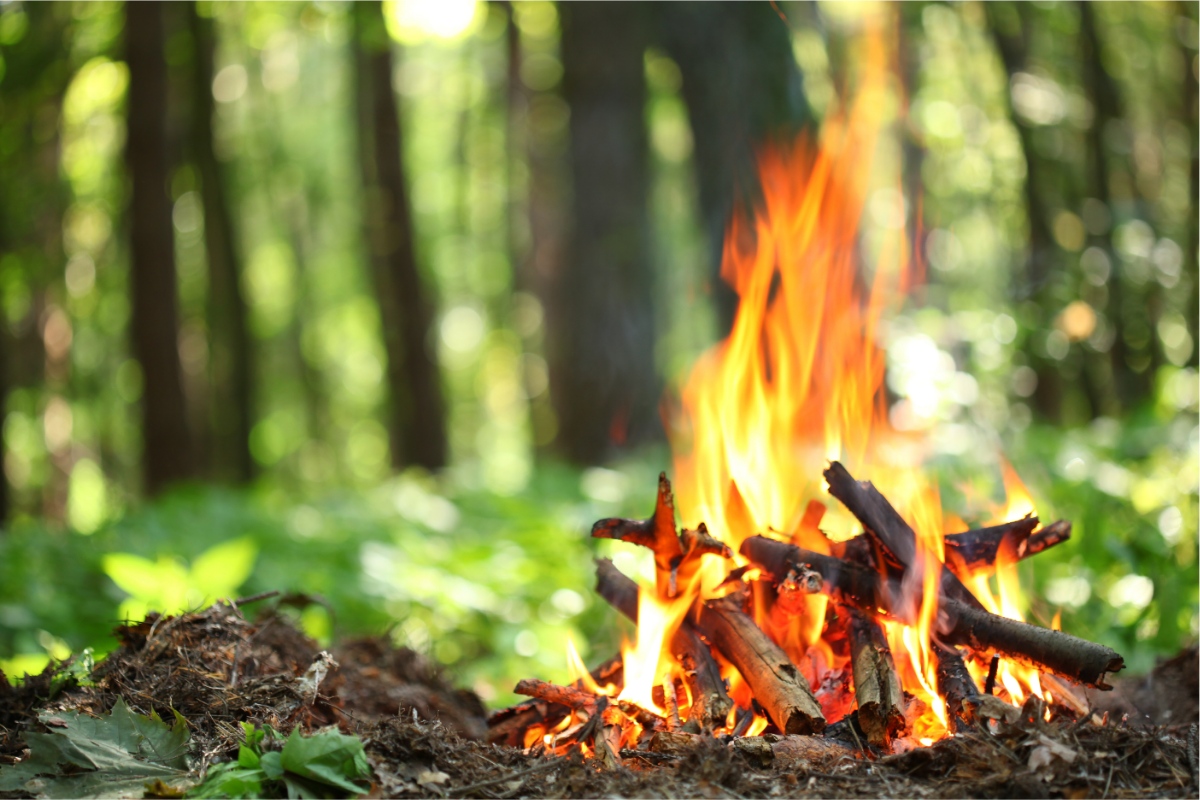
Mindfulness that focuses on a campfire can be an effective way to reset your mood. Simply directing your attention to the light, sound, and warmth of the flames allows mental noise to gradually fade, making it easier to feel a sense of reduced stress.
That said, this practice is meant as relaxation support and personal self-care, not as medical treatment. If you are experiencing significant physical or mental distress, professional medical support should always come first. Safety comes before everything else—never push yourself or take unnecessary risks.
What you may experience includes a calmer mood, reduced irritability, and easing of tension before sleep.
What not to expect is an instant fix or a replacement for diagnosis or treatment.
Keeping preparation and fire-starting simple is key. If ignition takes too long, focus can be lost. Using an intuitive fire-starting tool like CHACCARD helps reduce stress before you even begin, allowing you to ease into mindfulness more smoothly.
The Autonomic Nervous System: Balancing Activity and Rest

Our bodies are regulated by two systems: the sympathetic nervous system (active mode) and the parasympathetic nervous system (rest mode). During work or daily stress, the sympathetic system often dominates.
Slow breathing and quiet observation while watching a campfire naturally calm the eyes and ears. This supports parasympathetic activity, helping heart rate slow and muscle tension ease—making stress reduction more likely. No complicated theory is required.
Watch the fire. Breathe slowly. That alone is enough.
Basic cues are simple.
Exhale slowly through the mouth and let the breath naturally lengthen.
Inhale gently through the nose without lifting the chest or shoulders.
Soften your gaze and watch the flame’s natural, irregular movement—the calming “1/f fluctuation.”
Mindfulness Is a Technique, Not a Belief System
Mindfulness simply means practicing attention in the present moment. It is not tied to religion or ideology. The practice itself is straightforward.
Start the fire safely, without rushing.
Focus on the flame, sound, and warmth without judging what you feel.
When distractions arise, gently return your attention to your breath and the fire.
Choosing tools that do not interrupt concentration matters. If you want quick, stable ignition from the first attempt, a compact fire starter like CHACCARD works well. Faster ignition means more uninterrupted time to relax your nervous system.
Campfire Basics for Beginners
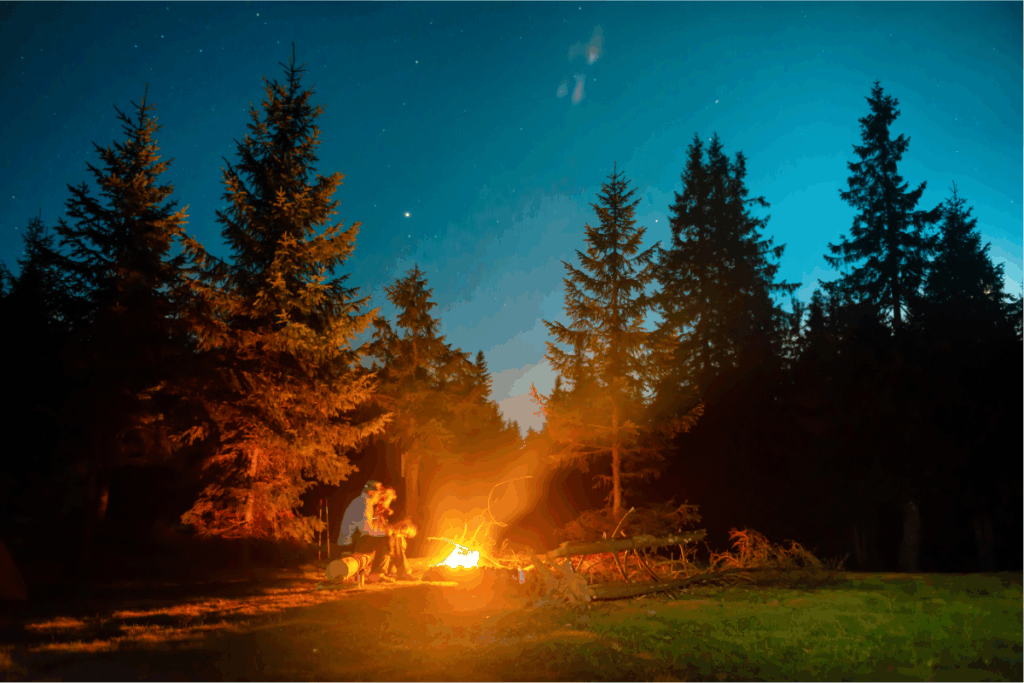
The minimum essential gear includes
a fire pit or fire stand, a fire starter, tinder materials such as dry chopsticks, wood shavings, jute twine, or cotton, thin kindling like small twigs or split wood pieces, larger firewood, fire tongs, heat-resistant gloves, a fireproof ground sheet, water and a lid or fire-extinguishing bag, and a wind shield or tarp when conditions are windy.
Key points are to keep gear minimal and lightweight, prepare extra dry tinder and kindling, and place extinguishing tools within immediate reach from the start.
Using CHACCARD Effectively

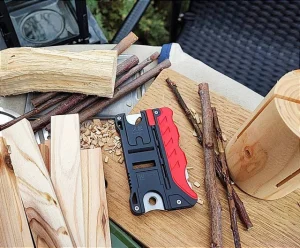
CHACCARD allows quick, intuitive ignition and easy re-ignition if the flame goes out. Wind-resistant designs improve ignition success, and one-handed use helps you keep your eyes on the fire rather than on the tool. Using loosened jute fibers or cotton as tinder allows sparks to transfer quickly.
The faster and more stable the fire start, the longer you can stay immersed in campfire mindfulness. Reducing stress during preparation is the real trick.
Two Ignition Approaches
The first approach
is the feather stick method. Shave dry wood into thin curls, place a fireproof sheet under the fire pit, form a small mound of feather sticks, and surround it with pencil-thin kindling. Ignite the base using CHACCARD, then gradually increase fuel size from finger-thin to wrist-thick. Always leave a clear airflow path so the fire can breathe.
The second approach
uses fire starters. Prepare fire starters or cotton infused with wax or petroleum jelly, arrange kindling in a teepee or log-cabin shape, ignite the starter using CHACCARD, and add thin wood gradually once the flame stabilizes. Avoid placing large logs too early.
Wind, Rain, and Damp Wood
Place wind shields upwind and sit downwind. A top-down fire-building method can reduce smoke. Split damp wood to access dry inner cores and carry tinder and kindling in waterproof bags. Pitch tarps high enough to avoid sparks, and consider canceling if wind speed exceeds about five meters per second.
Common Problems and Fixes
If the fire goes out quickly, add more thin kindling and increase heat density.
If there is too much smoke, use drier wood and loosen the structure for better airflow.
If the flame is weak, open air paths slightly.
If the flame feels too intense, reduce fuel size and quantity.
If ignition is slow, increase tinder volume or quality and focus sparks precisely with CHACCARD.
Firewood Sourcing and Use
Buying local firewood helps prevent the spread of pests and disease. Always check facility rules, as some locations prohibit bringing firewood. Take unused wood home rather than leaving it behind.
Softwood ignites easily but burns quickly, making it suitable for short sessions. Hardwood burns longer and steadier, creating a calmer fire.
As a rough guide, a solo fire for about one hour requires slightly less than one bundle of wood. For three to four hours, plan on two to three bundles, with some margin for weather and fire-building style.